
Car price tracker
Track car prices and stay informed on market trends with our comprehensive car pricing tool. See historical prices and compare models to make an informed decision on your next vehicle purchase. Find the best deal on your dream car today!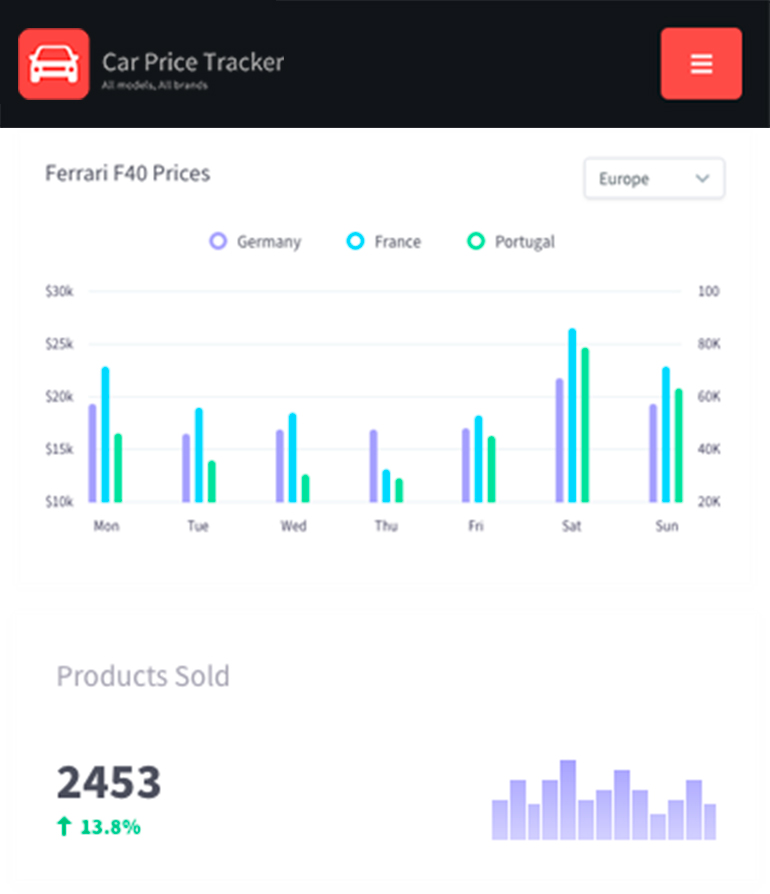
Daihatsu - Price history
Daihatsu – a name synonymous with compact, economical, and reliable mobility in Japan and many emerging markets. While it is not positioned as a luxury or high‑performance marque, Daihatsu’s focus on affordability, fuel economy, and a tight, dependable platform has earned it a loyal customer base worldwide. Brand history and reputation Daihatsu was founded in 1908 in Tokyo, originally as a toy manufacturer. By the 1960s the company had shifted exclusively to automotive production, specializing in small cars and kei‑class vehicles. Over five decades, Daihatsu has evolved into a trusted provider of affordable transportation, particularly praised for its engineering efficiency and low maintenance costs. Today, it enjoys strong brand equity in Japan and many Asian, African, and South‑American markets, where its compact models hit the sweet spot between price, practicality, and reliability.
- Popular and flagship models currently on the market include:
- March – a versatile hatchback that has become a bestseller in Japan and the Philippines.
- Sirion – a compact sedan that offers generous boot space and excellent fuel efficiency.
- Terios – a compact SUV that balances off‑road capability with city usability.
- Mirage – a full‑size sedan with a reputation for reliability and low running costs.
- Cuore – a subcompact vehicle popular in Singapore and Malaysia.
- Fuel economy and emissions regulations – stricter standards can influence both newer models and the cost of maintaining older ones.
- Supply chain costs – fluctuations in steel, aluminum, and electronic component prices can squeeze margins and affect retail prices.
- Competitive pricing strategies – local competitors often adjust their pricing to undercut Daihatsu, especially in the compact segment.
- After‑sales support and warranty terms – generous coverage can justify a slightly higher retail price and enhance resale value.
- Currency exchange rates – as many parts are sourced from Japan, fluctuations can be felt in final retail pricing in global markets.
Select your model
1992
1997
2001
2003
2010
2019