
Car price tracker
Track car prices and stay informed on market trends with our comprehensive car pricing tool. See historical prices and compare models to make an informed decision on your next vehicle purchase. Find the best deal on your dream car today!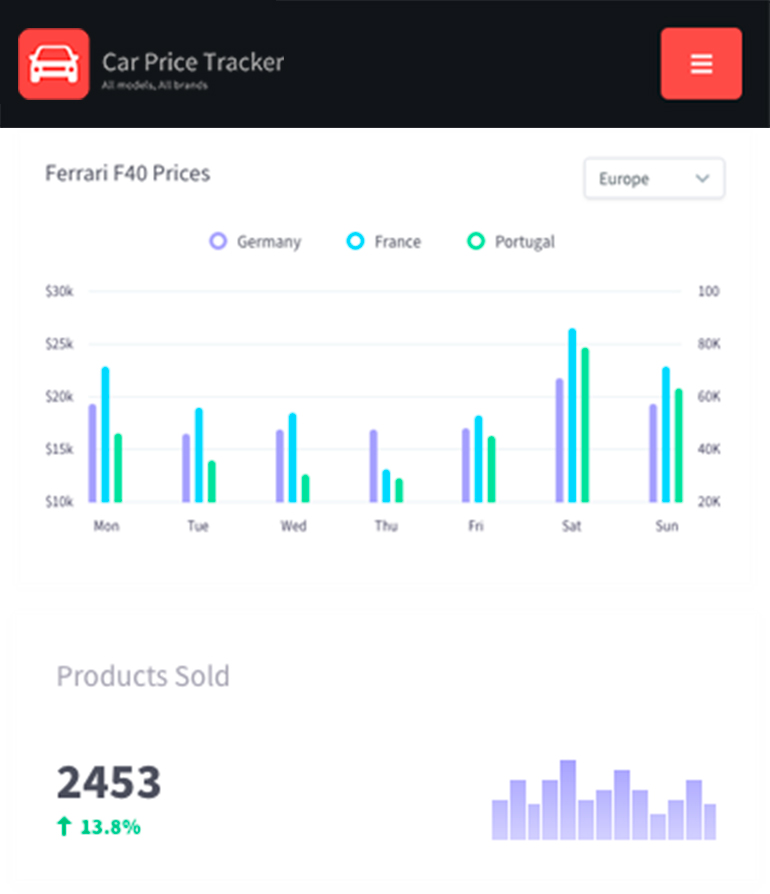
Lada - Price history
**Lada** is a long‑standing Russian automaker that has positioned itself firmly in the economy segment. Its cars are known for accessible pricing, utilitarian design, and a reputation for durability in harsh climates.
Founded in 1966, Lada was originally a collaboration between the Soviet Union and Fiat, leveraging established engineering while catering to local manufacturing capabilities. Over the decades, the brand has become synonymous with reliable, no‑ frills transportation for everyday consumers.
- Lada Granta – compact sedan, widely noted for its modern styling within a classic price bracket.
- Lada Vesta – larger family sedan, offers updated safety features and a more comfortable interior.
- Lada Niva – rugged crossover, praised for off‑road capability and a cult following among outdoor enthusiasts.
- Lada Kalina – mid‑size compact, blending practicality with a relatively low maintenance cost.
- Lada Samara – legacy model that remains popular in secondary markets for its straightforward mechanics.
When evaluating Lada price trends, owners and prospective buyers should keep a few key depreciation patterns in mind. Lada vehicles typically exhibit a relatively moderate first‑year loss, often around 20–25%. However, after five years the decline can accelerate, especially for models that have become dated or have shifted into the segment of high mileage wear. This pattern is sometimes referred to as Lada depreciation, a term used by fleet managers and resale specialists who track long‑term value retention.
Residuals for Lada cars are intimately linked to Lada market value. In regions where the brand still commands strong presence, such as Russia, Belarus, and parts of Eastern Europe, used cars can fetch a respectable price relative to their age. In contrast, in markets like Western Europe or North America where Lada does not compete on brand recognition, the used Lada price tends to be significantly lower, influencing resale prospects for owners aiming to sell or trade in.
Market demand for Lada is closely tied to the economic environment of the countries where it sells. In Russia, where local production is supported by state subsidies and a robust domestic supply chain, demand remains steady. Lada car prices in these markets are therefore moderated by fiscal incentives and proximity to manufacturing facilities. In contrast, foreign markets often see higher import duties and logistical costs, which amplify the retail price and reduce overall demand.
Factors affecting Lada vehicle prices include:
- Fuel efficiency and certification regulations – vehicles that meet stringent emissions standards command a premium, which can increase both new and used market prices.
- After‑sales service network – widespread dealer presence and spare part availability help maintain a steadier resale value.
- Warranty terms – extended warranties or guaranteed service contracts can boost the appeal of newer models.
- Brand perception and media coverage – recent successes or controversies can swing public opinion and impact perceived value.
- Macro‑economic factors – inflation, currency fluctuations, and interest rates directly influence the cost of owning and trading in Lada cars.
In regional markets such as the former Soviet republics, Lada
Select your model