
Car price tracker
Track car prices and stay informed on market trends with our comprehensive car pricing tool. See historical prices and compare models to make an informed decision on your next vehicle purchase. Find the best deal on your dream car today!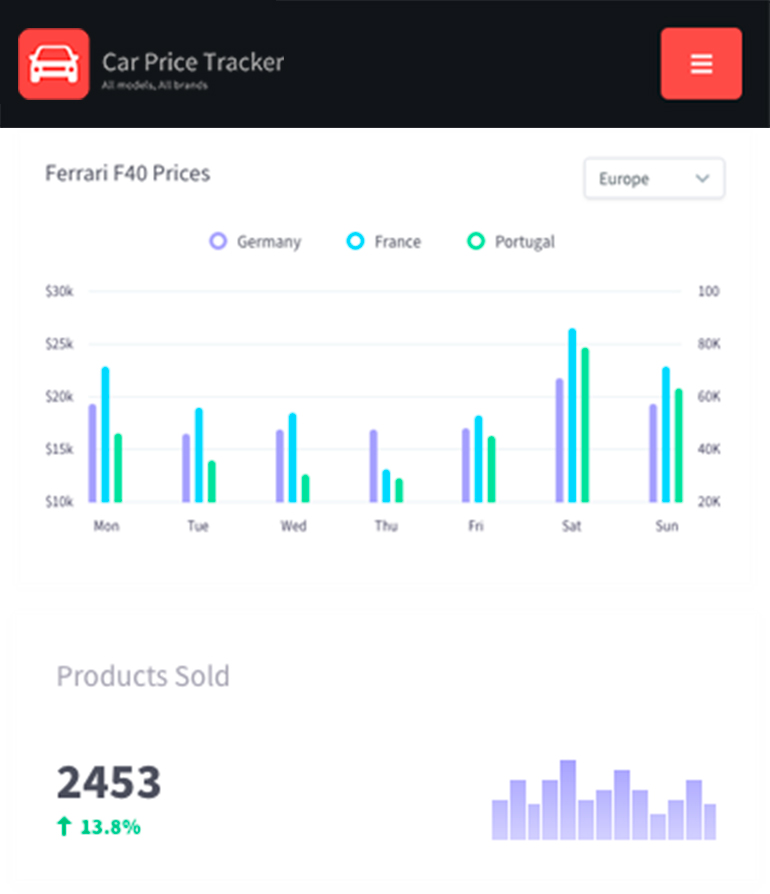

Ssangyong - Musso (1996)
Discover the Ssangyong Musso price landscape for one of South Korea’s most enduring SUVs. Whether you’re looking at the original 1996 model or a newer used variant, our database compiles every piece of information you’ll need to understand how these vehicles hold value over time.
For the 1996 Ssangyong Musso, buyers may wonder: what is a 1996 Ssangyong Musso worth in today’s market? The answer varies greatly with condition, mileage, and region, but a typical 1996 Ssangyong Musso price will reflect its original baseline value plus the depreciation curve that has shaped its resale market in recent years. By examining the used Ssangyong Musso price progression, you can pinpoint when buying is most advantageous.
Key Specifications at a Glance
- Engine: 1.9‑L naturally aspirated 4‑Cylinder or 2.4‑L inline‑6 (depending on trim)
- Power Output: 106–140 horsepower, 122–169 lb‑ft of torque
- Transmission: 4‑speed or 5‑speed manual; 4‑speed automatic optional in later years
- Drive Layout: 4‑wheel drive (front‑wheel drive available on select trims)
- Fuel Type: Regular unleaded gasoline
- Dimensions (L × W × H): 4,720 mm × 1,860 mm × 1,640 mm
- Wheelbase: 2,730 mm
- Seating Capacity: 5 passengers, optional 6‑seat layout in later revisions
- Payload Capacity: 700 kg (approximated)
- Brake System: Disc brakes front and rear; optional ABS in newer models
- Suspension: MacPherson strut front, solid axle rear (standard for 1996)
These specifications provide a solid baseline for determining how a particular Ssangyong Musso compares to market peers such as the Toyota Hilux, Ford Ranger, or Nissan Frontier.
Depreciation Insight: How Much Does a Ssangyong Musso Lose?
The Ssangyong Musso depreciation curve is consistent with many early‑generation SUVs. Typically, a brand‑new vehicle experiences a steep drop in its first year, then a more gradual decline thereafter:
- First year: 15–20 % of
Last 20 car trackeds
Last tracked date Status Price Price rank Link 2 years ago used €2,800.00 Unlock all links 2 years ago used €2,800.00 Unlock all links 2 years ago used €2,800.00 Unlock all links 2 years ago used €2,800.00 Unlock all links 2 years ago used €2,800.00 Unlock all links 2 years ago used €3,000.00 Unlock all links 2 years ago used €3,000.00 Unlock all links 2 years ago used €3,000.00 Unlock all links 2 years ago used €3,000.00 Unlock all links Note that old links may not work