
Car price tracker
Track car prices and stay informed on market trends with our comprehensive car pricing tool. See historical prices and compare models to make an informed decision on your next vehicle purchase. Find the best deal on your dream car today!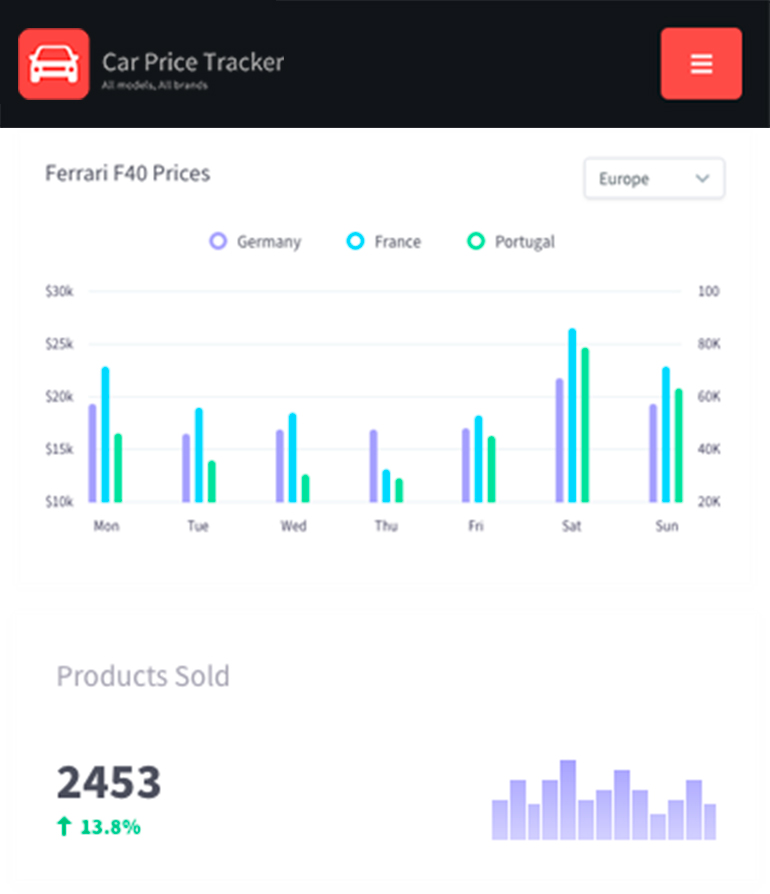
Lancia - Price history
Lancia is an iconic Italian marque that has carved a niche rooted in understated luxury, refined craftsmanship, and a legacy of motorsport success. Although it no longer dominates the mass‑market segment, Lancia still occupies a respected position as a boutique performance‑luxury brand, appealing to owners who value heritage and distinctive design over sheer volume. Lancia’s history spans more than a century, beginning in 1906 as a coachbuilder before evolving into a full automotive manufacturer by the 1920s. The brand became synonymous with elegance and racing triumphs, most notably with the legendary Lancia Stratos that clinched three consecutive World Rally Championships in the 1970s. Today, Lancia’s reputation rests on its timeless styling, high‑quality interiors, and the seamless blend of Italian artistry with mechanical reliability. Flagship and popular models currently available in the market include:
- Arto – a compact, front‑engine sedan that balances everyday practicality with classic Italian refinement.
- Delta GT – a sleek hatchback spirited driving dynamics and a sophisticated cabin.
- V6 Phedelica – an executive 2‑door coupe that showcases a powerful V6 engine and luxurious appointments.
- Grand Sport 2000 – a limited‑edition performance coupe that celebrates the brand’s racing heritage.
Select your model
1934
1948
1953
1954
1955
1957
1960
1964
1965
1967
1968
1972
1973
1979
1981
1984
1985
1988
1989
1990
1991
1992
1993
1994
1995
1997
1998
2001
2006
2017
2020
2021
2025